Wilson College Alumnae and Staff Featured at First Hemp Symposium During New York Textile Month
The first-ever Farm to Fabric: Hemp Textile and Fashion Symposium held during New York Textile Month featured designs and expertise from the Wilson College of Textiles.
Each fall, New York City hosts New York Textile Month, a month-long, grassroots cultural festival honoring material heritage, traditional craftsmanship and innovation in fiber arts. New York Textile Month was the perfect backdrop for the first ever ‘Farm to Fabric: Hemp Textile and Fashion Symposium’, organized by Choose Your Change, a Brooklyn-based nonprofit and creative strategy hub.
The debut symposium featured a weekend of free programming designed to educate about hemp fiber processing, textile development and design manufacturing. It also featured the expertise and designs of Wilson College of Textiles alumnae and staff.
Hemp is a resilient, biodegradable natural fiber with a lower environmental impact than other crops due to its fast growth cycle and minimal water needs. While processing challenges have historically slowed widespread adoption, Wilson College researchers are working to change that by developing improved fiber separation and spinning technologies to position hemp as an eco-friendly alternative to cotton and synthetic fibers.
The event offered another way for Wilson College to expand its role in the hemp ecosystem. Alisha Spradlin, manager of the Zeis Textiles Extension (ZTE) Spinning Lab, co-hosted the event after connecting with Canna Markets Group Founder Joseph Carringer during a hands-on spinning workshop she was leading at NC State University. Carringer introduced Spradlin to Choose Your Change CEO Jen Adams.
Together, Spradlin and Adams designed the event to prioritize productive conversations and learning opportunities while showcasing the artists and organizations driving the evolving farm-to-fabric movement. “How can we synthesize all of this information into something we can really build on?” said Spradlin.
Moving hemp forward
Aligning with the spirit of New York Textile Month, the symposium explored hemp’s history by tracing the material’s journey from agricultural field to traditional fiber, and its future by discussing hemp’s expanding potential within a more sustainable textile economy. Speakers detailed processing and manufacturing practices and confronted major industry bottlenecks, chief among them scalable infrastructure. Experts noted that long-term commercial success hinges on securing reliable buyers and end-use manufacturers.
Passionate about strengthening the U.S. hemp industry, Spradlin spoke on several panels and networked with fellow industry leaders. These efforts complement the college’s partnership with the National Science Foundation’s Textile Innovation Engine of North Carolina to connect farmers, researchers and manufacturers to build a reliable supply chain.
“This is a great way to tap into the fashion side of things and get designers and producers interested in actually using those materials. Talking about the difficulties and achievements in processing it and just trying to bring everyone together in one place,” said Spradlin.
Featuring functional fashion
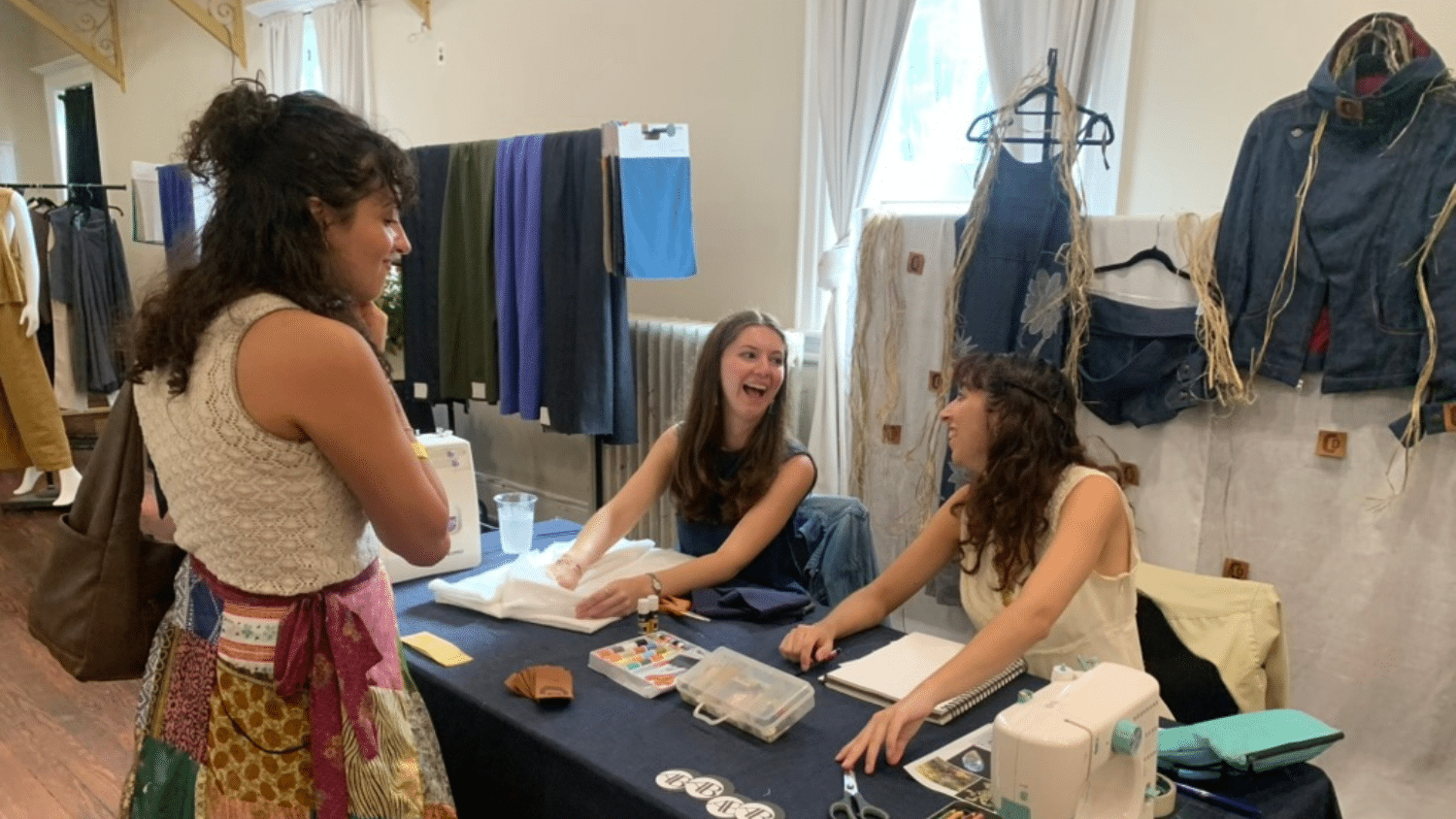
Spradlin invited two college alumnae, Arynn Baginski ’26 (B.S. fashion and textile design, concentration in fashion design) and Kat Charrier ’26 (B.S. fashion and textile management, concentration in fashion development and product management), to participate in the symposium. The pair created original designs using denim-based hemp fabric and participated in a live demonstration.
Baginski, who currently works as a bridal stylist and intern at Coastal Knit Bridal, met with Adams during her design process to discuss ideas for the display. Inspired by fellow ‘Farm to Fabric’ designers who drew from their heritage, she leaned into her North Carolina roots to create World War II-inspired workwear for her collection: a bomber style jacket, a hat and a pair of shorts. “As a designer, part of that career development for me is building pieces of my portfolio, getting involved and having a place to display it,” said Baginski.
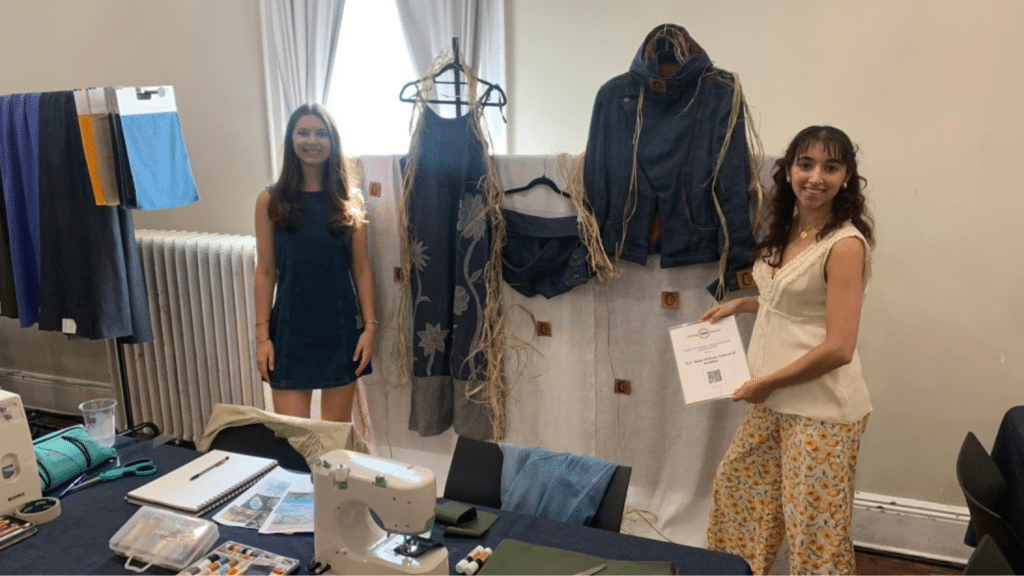
Charrier used the opportunity to participate in the symposium and learn more about natural fibers through “the lifecycle from fiber to fashion.” Hemp farmers inspired her to create a workable, durable and functional garment: a pair of overalls featuring sewn-on flowers growing from the bottom of the pants to the waist with an enlarged hem that symbolized the plant growth process.
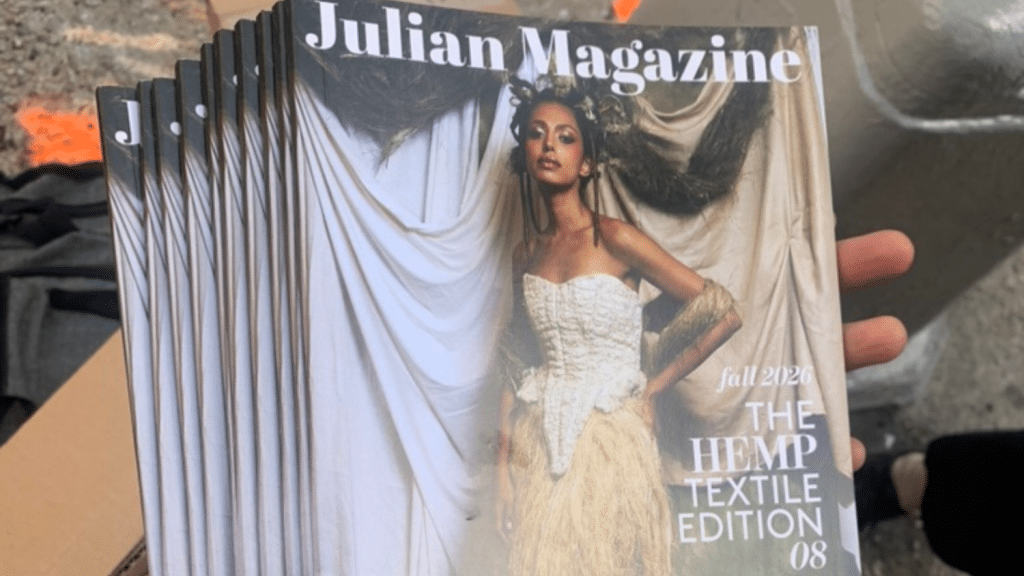
Their designs were photographed for and featured in a special Hemp Textile Edition of Julian Magazine, a fashion and lifestyle publication.
Growth opportunities
Baginski and Charrier led a live demonstration during the symposium to show, on a small scale, how hemp products can be manufactured on a large scale. Attendees brought items, such as denim jeans, to the booth and the alumnae sewed hemp patches and designs onto them in real time. “That was good practice to get that kind of prompt and then work within the bounds of manufacturing and talking with professionals,” said Baginski.
Baginski said the symposium provided valuable insights into product marketability, manufacturing efficiency and operations management.
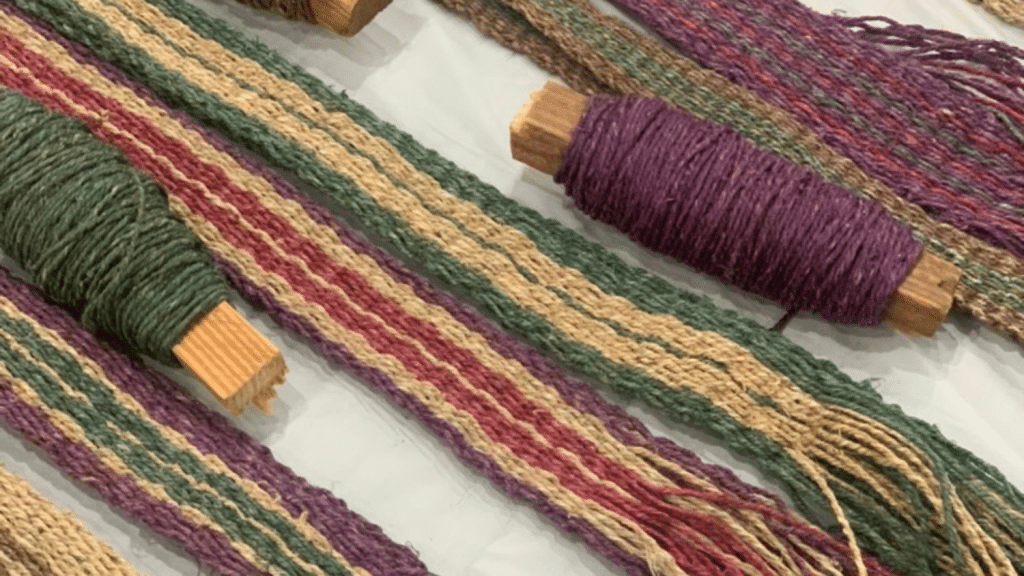
For Charrier, connecting with demonstration attendees passionate about integrating hemp into the textile industry made a lasting impression. She spoke with people with diverse cultural backgrounds who shared the importance of their traditions and how they’ve used the fiber for generations.
“Being willing to learn about new sides of the textiles industry gave me a new appreciation for the fiber,” said Charrier.
Next steps
Spradlin said the Choose Your Change team is discussing another event for next year. While the team has not yet set a time or location, they continue efforts to advance conversations around sustainability in hemp-forward fashion.
As Baginski and Charrier reflected on the opportunities and connections they experienced through the weekend, both agreed that keeping an open mind to new perspectives was the most important takeaway.
“Prioritizing sustainability and getting to hear from different voices that were promoting those practices was really important,” said Baginski.
- Categories: