Wilson College Teams Up With “High on the Hog”’s Stephen Satterfield in New ‘Multi-faceted’ Partnership
The Netflix docuseries host, food and wine writer, and sommelier has a strong vision for North Carolina’s textiles sector, starting with his innovative new apparel line.
In episode two of Stephen Satterfield’s Peabody award-winning docuseries “High on the Hog,” the food writer, sommelier and filmmaker visits North Carolina as part of his larger exploration into how African American cuisine has transformed America.
As Satterfield and his team roamed the state filming for the Netflix series, long drives past seemingly endless fields of cotton gave birth to an idea for a new startup business — one that would ultimately lead to a unique new partnership with the Wilson College of Textiles.
Venturing into the textile industry
Last month, after years of preparation, Satterfield officially unveiled his new apparel line, Comoco, first conceived during a “moment of empowerment” while filming his acclaimed series.
Launched on Juneteenth, the backbone of the apparel business is what its founder has dubbed the “closest thing” to a Black owned-and-grown supply chain, sourced and produced entirely within North Carolina.
It’s a personal mission for Satterfield, whose docuseries touches on his own ancestors’ story as slaves: “Cotton in particular has been the source of a lot of trauma and discomfort, I think — really, for all Americans — but certainly for African Americans,” he says.
“I think it’s just a wonderful opportunity to create a new story,” Satterfield continues. “To take a painful history and turn it into a legacy of empowerment.”
Satterfield teams up with NC State
Stops along that journey have allowed Satterfield to collaborate closely with the Wilson College.
In building Comoco, he’s tapped the deep industry experience and world-class facilities on Centennial Campus.
Early in the development phase for his new company, NC State’s Zeis Textiles Extension (ZTE) helped connect Satterfield with product development assistance at the college’s W. Duke Kimbrell Flex Factory’s Prototype Lab, which was the first to print Comoco’s startup’s logo on a garment.
The college’s extensive ties to all segments of the North Carolina textiles supply chain also expanded Satterfield’s personal network. That’s proven to be a crucial asset in standing up the supply chain that, by Comoco’s very ethos, needed to be entirely based within the state.
But along the way, Satterfield has made himself readily available, offering fresh perspective on the textiles sector formed from his own rich background in the food and wine industries.
Collaborating just made sense, ZTE associate director Melissa Sharp says.
“I think the intention and the work that he’s put into this, behind the scenes, over a long period of time, is really reflected in the story he’s able to tell around this brand,” Sharp, who was among the first at the college to connect with Satterfield, explains.
“We regularly hear from both our alumni and entrepreneurs who have a textile idea, but are looking for help getting started,” she adds. “We can help them navigate the industry, make introductions, and provide technical support and know-how as part of our extension mission of the college.”
Satterfield brings his own valuable insight
Yet, Satterfield has been equally generous in sharing his own valuable perspective, acquired from his vast, industry-transcending experience.
His Whetstone Media company is working with the Textile Innovation Engine in North Carolina, amplifying important work that’s currently underway through videos and other multimedia productions.
Specifically, Satterfield’s team is spotlighting The Engine’s efforts to strengthen the state’s textiles sector — work meant to prepare the next generation of professionals through updated curricula at more than 100 high schools across the state.

Recently, that saw Whetstone chronicling teacher training at the college, a critical aspect of the work, which is a collaboration between Engine partners, The Industrial Commons, Gaston College and NC State, to ensure the state’s historical textile industry continues to grow and evolve over the coming decades.
This year, Satterfield also offered his rich perspective on entrepreneurship and the viticulture concept of “terroir” in his role as the 2025 John W. Pope Industrialist in Residence, which provides a forum for students and faculty to interface with global industry and government executives.
Last winter, he served as the guest judge for the college’s annual entrepreneurship competition, Pitch to the Pack.

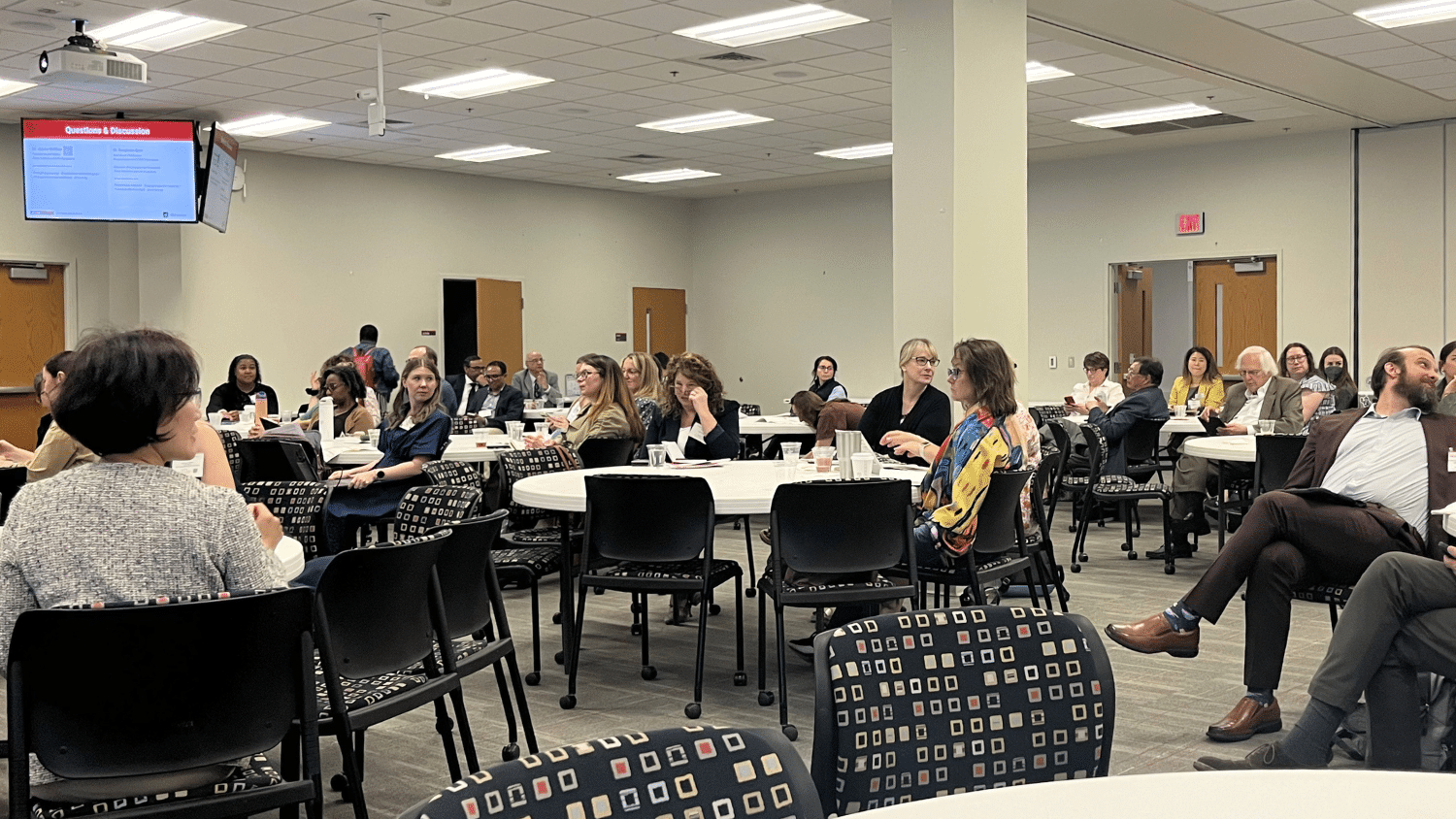
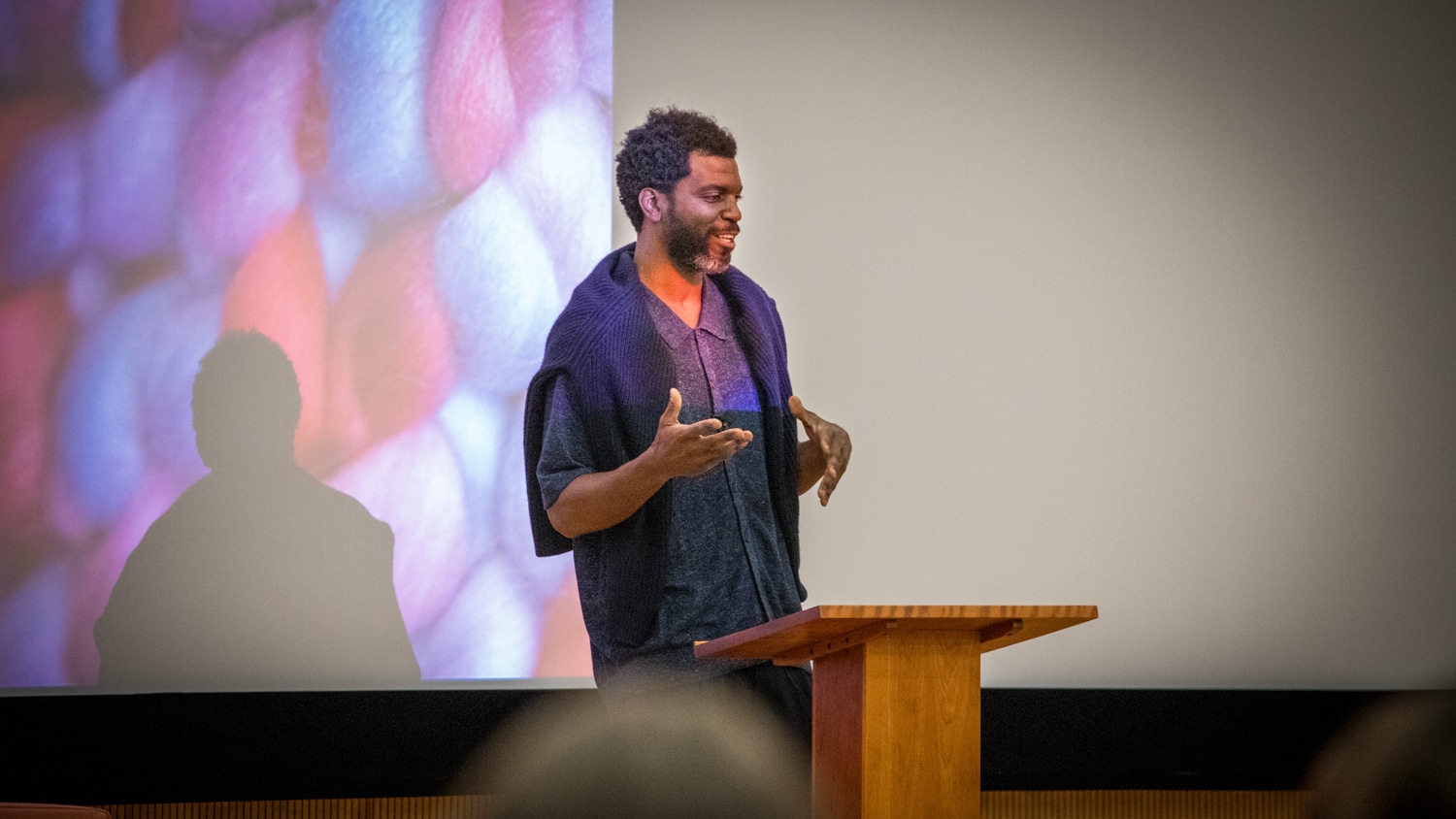
And, in February, Satterfield spent nearly 90 minutes speaking to students and staff and faculty through a fireside chat hosted by Friends of the Libraries, moderated by Dean David Hinks.
During the discussion, Satterfield shared his vision for how concepts like “farm-to-table” — nearly ubiquitous, today, in discussion about food and wine — holds promise in textiles, an industry long plagued by offshoring and relative disregard for where products are made.
“If we were able to understand the social impetus to create organic, and to create fair trade as a category,” Satterfield said in his remarks, “I felt that we could make a compelling case to develop a social impetus for the reclamation of African American-grown cotton.”
Watch the fireside chat below:

An enduring partnership
For Satterfield, that vision is now a reality with his new company
It’s an “ambitious undertaking” that, he says, was three-and-a-half years in the making.
And it’s one he hopes will be a launching pad — both for a new kind of textiles business, and for many more years of partnership with the college.
“I’m hoping that this is a multi-year, multi-faceted relationship that continues to support the manufacturing sector, the agricultural sector, and the culture more broadly of getting people engaged and excited about U.S. textiles,” Satterfield says. “In the same way that I’ve been inspired by the university as well.”
- Categories: