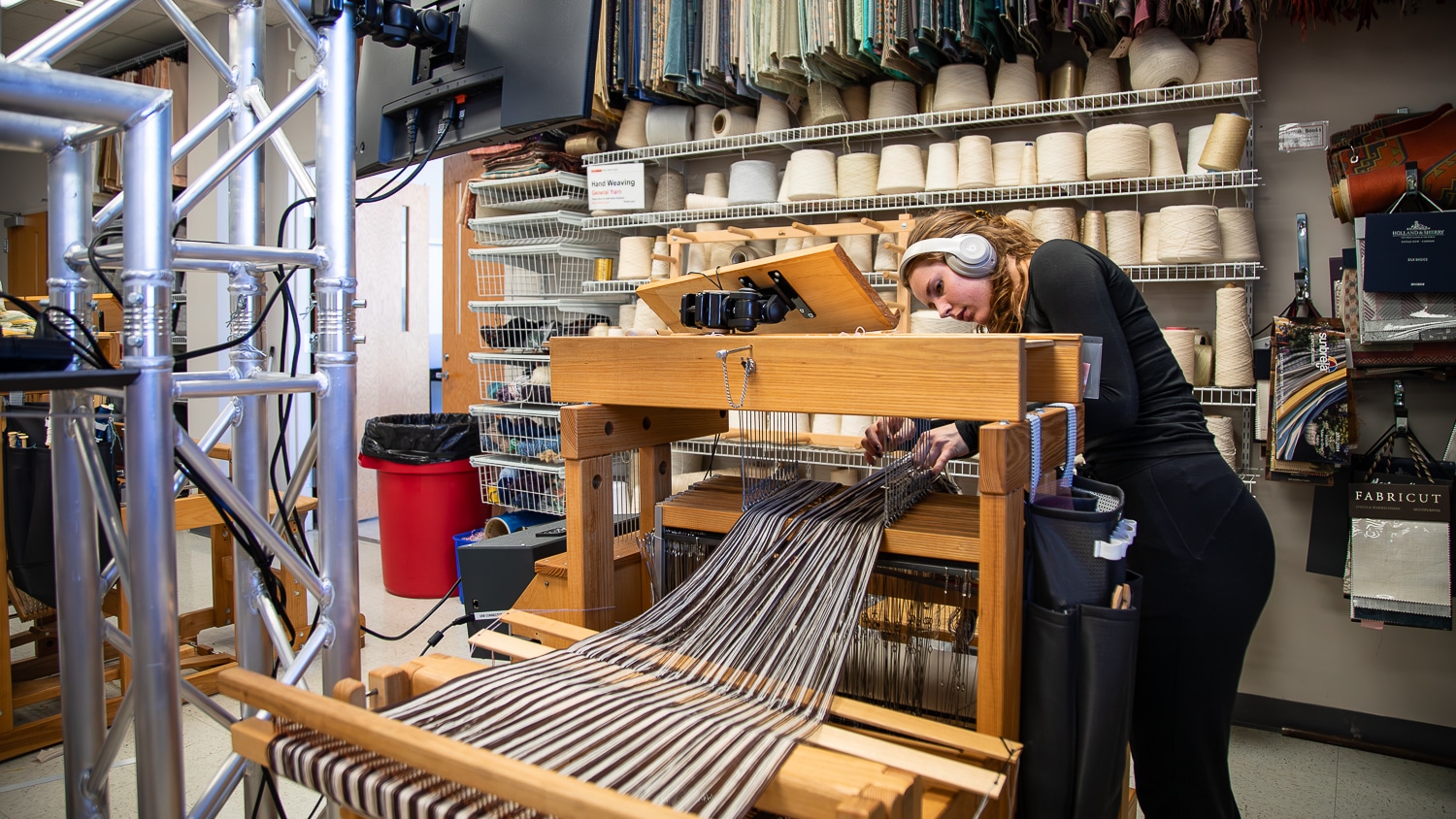
Students Develop Collections with Industry Partners
These NC State seniors created fashion collections focused on sustainability and accessibility and guided by valuable mentorship.
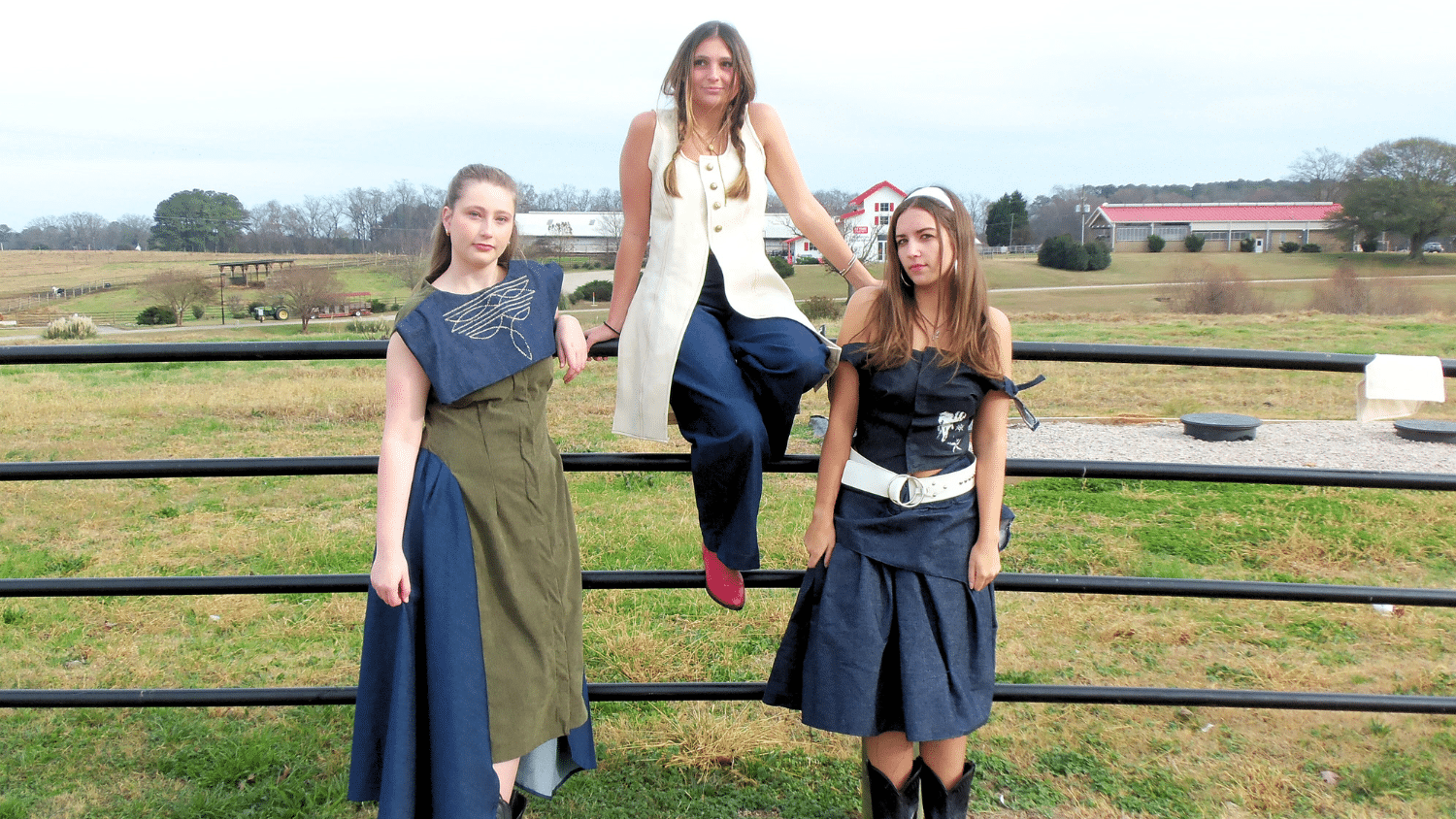
Students in the FTM 415: Fashion Product Development course had the opportunity to collaborate with industry leaders to design a collection tackling an issue or gap in the fashion industry. The course is the capstone for fashion development and product management students and allows them creative freedom alongside meaningful portfolio building.
“We were able to get live feedback on our designs throughout the product development process, from prototype to final garment. I will carry that experience into my professional career,” says Katelyn Jones, one of the designers.
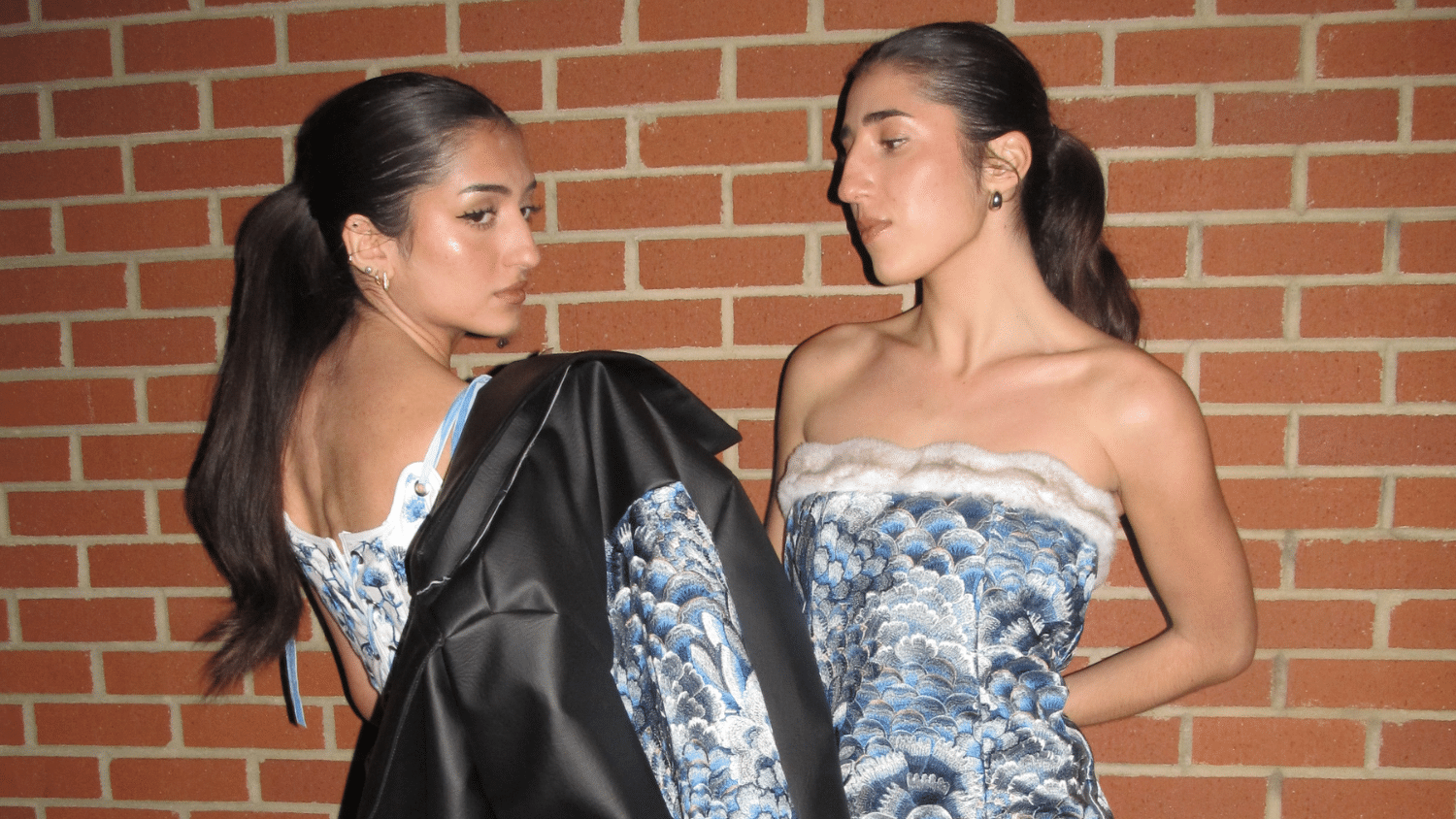
Take Sam Koziarz and Caroline Langdon, who designed a collection they called “sleek and icy.” Their work revolved around making high quality, unique designs affordable. With their industry partner P/Kaufmann, they were able to create works that achieved that mission.
Or take the collection that Ruby Jones, Katelyn Jones and Julia Pasin designed, which they described as, “Americana, Western and free-spirited.” With the needs of people with ALS in mind, they designed a collection that was both accessible and stylish.
Or take a look at the work of Destiny Elliot and Campbell Monk, who designed a collection of Y2K looks specifically for plus-sized women with the help of Summer Lucille, a fashion entrepreneur with the same goals.
Students then presented their collections to an audience of industry members, which was both a rewarding end to a long process and a great networking opportunity for these in-demand designers.
Read more about these students’ experiences in their own words below.
Meeting the demand
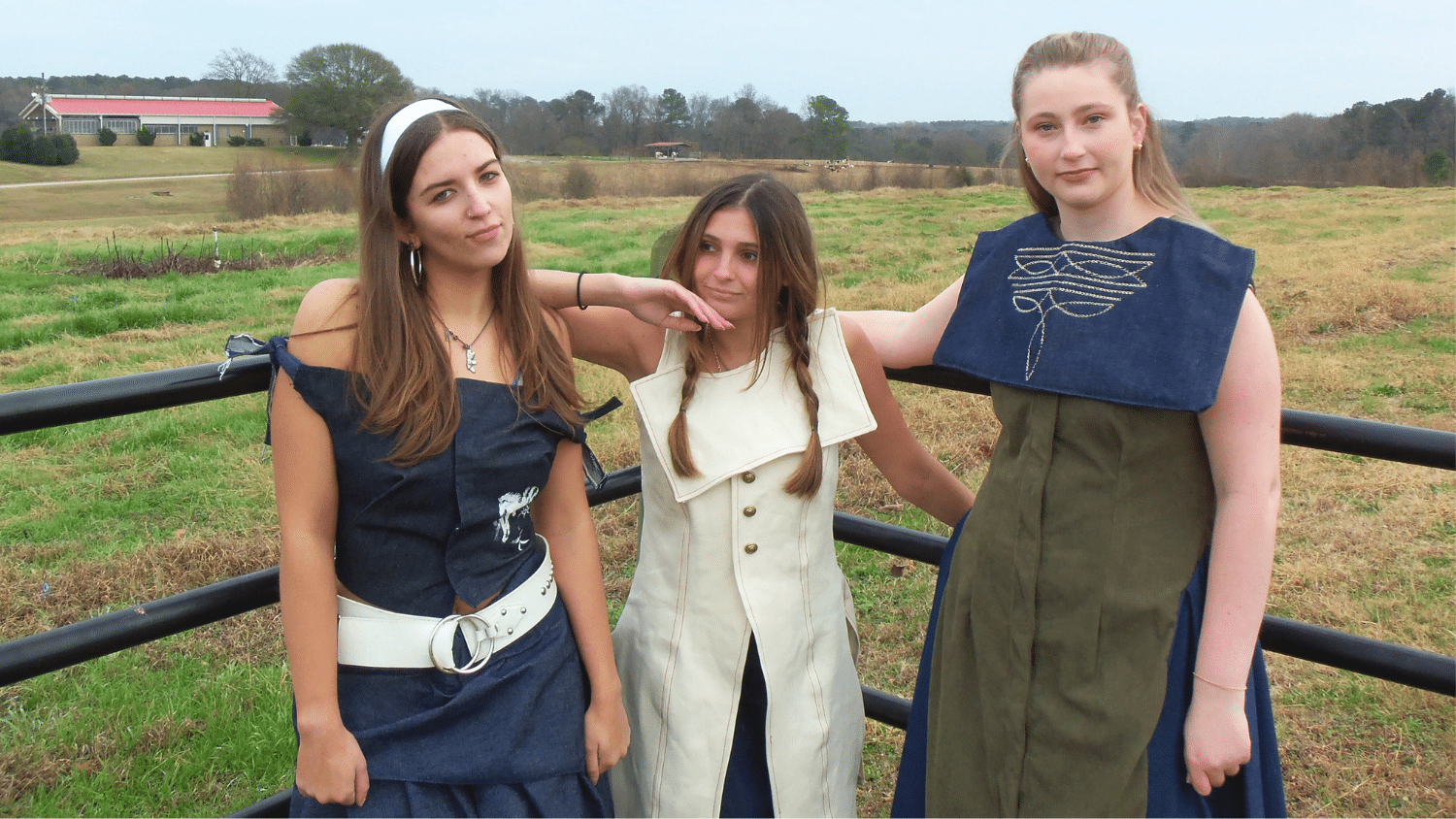
- Group Members: Ruby Jones, Katelyn Jones, Julia Pasin
- Collection Name: Maison Nuee
- Focus: Adaptive Fashion
- Industry Partner: Dr. Rick Bedlack (Duke ALS Clinic), Maura Horton (founder of MagnaReady), IAmALS and HerALSStory, Cone Denim
Can you describe your work and which part you are most proud of?
JP: In this project, my group and I were tasked with creating six cohesive adaptive garments specifically for the ALS community. Throughout the semester, we communicated directly with members of the ALS community and with Dr. Bedlack, who works at the Duke ALS Clinic. This process was difficult and new, but ultimately extremely rewarding.
What aspect of your work are you most proud of?
JP: I am most proud of the vest I created, which features magnetic closures and a detachable bib. I believe my craftsmanship improved significantly throughout the semester, and it was rewarding to see the garment completed.
What was it like working with your sponsor?
KJ: It was wonderful working with the adaptive fashion sponsors! We were able to get live feedback on our designs throughout the product development process, from prototype to final garment. I will carry that experience into my professional career. I learned that conducting small group feasibility tests with specific target markets is very helpful in ensuring that the garments created are actually beneficial and fulfilling a need.
In what ways do you feel FTM 415 has prepared you to enter the professional world?
KJ: It provided me with the full product development process from start to finish. The opportunity to have a target market provide live feedback throughout the semester was invaluable. It taught me how to maintain consumer focus when designing while also incorporating my own personal style.
JP: FTM 415 has provided me with amazing connections that I would have never made without this course. Sam Pearce [Assistant Professor of the Practice] structured this course specifically to benefit us in our careers, and I am forever thankful for her. She truly made this class, and I will cherish her lessons throughout my career. Through having mentors, I feel better prepared for the workforce because our meetings with them offered guidance, constructive feedback and professional insight that helped me refine my skills, build confidence and understand industry expectations. These experiences have given me a stronger foundation as I move forward in my career.
Flipping the script
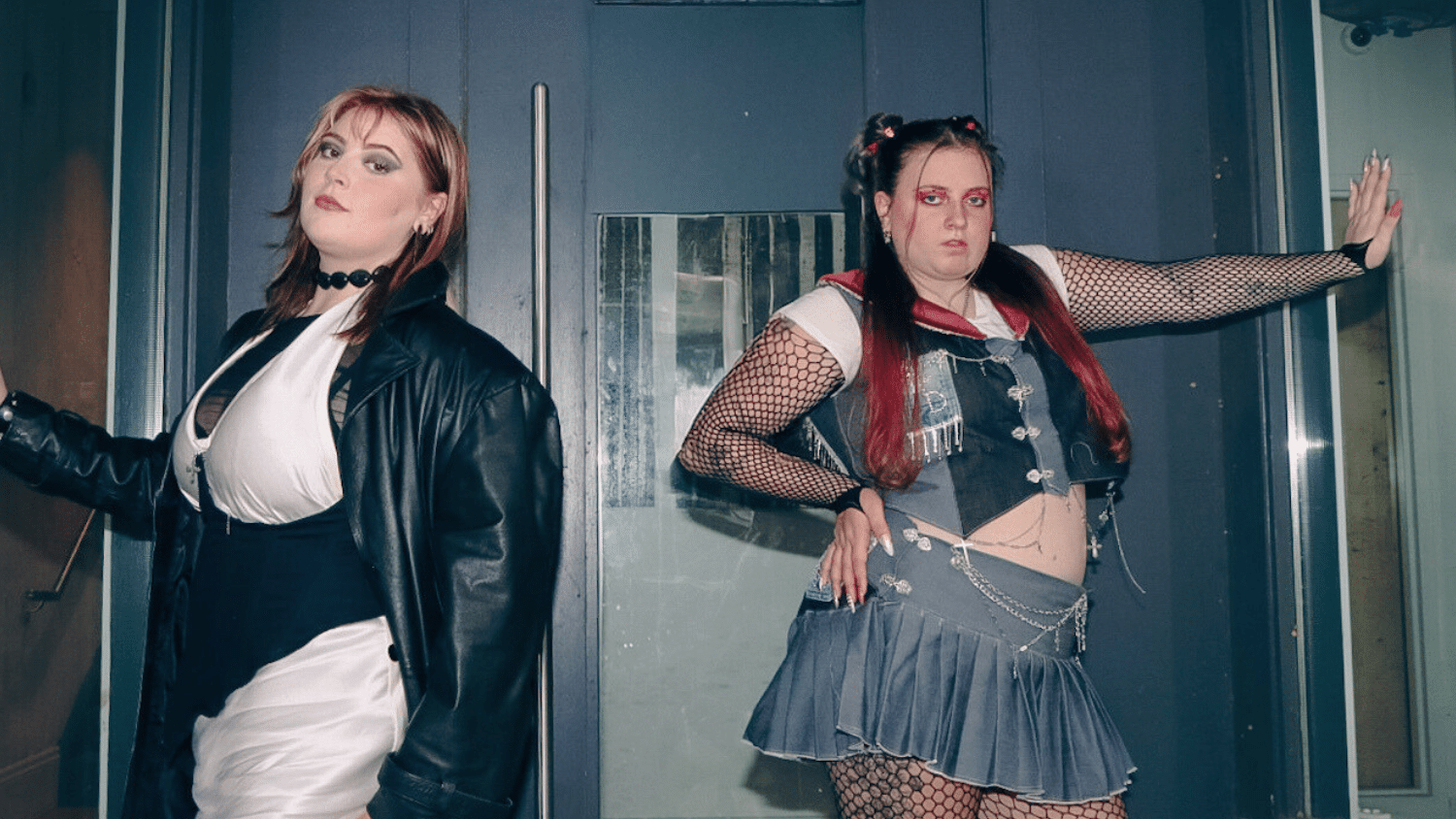
- Group Members: Destiny Elliot, Campbell Monk
- Collection Name: The Riot Dolls
- Focus: Plus-Size Design
- Industry Partner: Summer Lucille (Founder and Owner of Juicy Body Goddess)
What gap in the fashion world does your line address?
DE: The Riot Dolls addressed the lack of stylish plus-size fashion, especially within the Y2K trend. Many brands heavily overlook plus-size customers, and we stepped in to change that.
Can you describe your line and what you wanted to achieve with it?
DE: Riot Dolls was created for plus-size girls who wanted a safe, stylish Y2K space to belong. We developed a persona of a confident plus-size woman: unapologetic, bold and ready to make waves in the fashion industry. Too often, plus-size girls are overlooked or pushed to the margins, and our goal was to completely flip the script.
What was it like working with your sponsor?
DE: Working with Summer Lucille was truly the best experience. She is someone I genuinely look up to, and I am grateful for the chance to collaborate with her.
What aspect of your work are you most proud of?
DE: The aspect of this project I am most proud of is the hand-applied bedazzling. It required roughly 15-20 hours of detailed work, and I am extremely proud of the result.
Looking ahead
- Group Members: Sam Koziarz, Caroline Langdon
- Collection Name: CHROMA
- Focus: Interior Fabrics and Sustainability
- Industry Partner: P/Kaufmann
What issue in the fashion world does your line address?
SK: We wanted our clothing line to focus on durability and sustainability. By solely using interior fabrics sourced from the fashion studio here at NC State, we were able to tackle both of these objectives.
What role did your sponsor play in the process?
SK: Our sponsor has been instrumental in supplying the lab with fabric and materials for the past year. As the Fashion Studio TA [teaching assistant], I have worked with them many times processing their donations. Being able to create garments using their fabric was a beneficial experience, and I think it strengthened the bond between P/Kaufmann and the Wilson College.
In what ways do you feel FTM 415 has prepared you to enter the professional world?
SK: FTM 415 covered the entire design and production process as a whole, taking the students step-by-step in creating a capsule collection. I think being able to see the process and experience each part individually definitely helped me find what part of the fashion industry I am interested in exploring a career in.
What aspect of your work are you most proud of?
SK: I am most proud of the corset (which I constructed) and the leather jacket (constructed by Caroline Langdon). Both of these pieces were executed very well and fit with our brand image perfectly.
- Categories: