NC State hosts a huge variety of design based academic programs, from architecture to media arts to textiles. Fashion and textile design student Bri Anderson hopes to bridge the gaps between disciplines by focusing on the shared value of sustainability.
Anderson, a junior, is the founder and president of the Eco-Design Outreach Club, a new student organization centering on interdisciplinary and eco-centric learning across the many fields represented at NC State.
Pushing the boundaries
The club came about during the spring of 2025 from a collaboration with her friend Cole McEldowney, who is studying environmental design in architecture. They wanted to create a space for students of different design disciplines to gather and learn from each other, utilizing their different areas of study and expertise.
“I think through everything that we learn in our different classes, there’s always different approaches that we all learn. I think it’s beneficial to collaborate, especially across design fields,” Anderson, who’s pursuing a concentration in fashion design, says.
Eco-design can involve any area of design, as long as it highlights environmental and social impact.
“For me, design is usually creating something to solve a problem. So, with eco- in mind, we’re solving problems around sustainability,” Anderson says.
Not only does Anderson see the club as an opportunity to learn as a designer, but also to think about sustainability in a variety of contexts and learn from people with different experiences and resources.
“I’m very curious and I like to learn different skills. I’m not set in one certain design area,” Anderson says. “So I wanted an opportunity to learn from other people and see how they approach sustainability in their own field and area of discipline.”
Taking action
The group’s first project is an ongoing collaboration with the agroecology club. They have created a dye garden at the Agroecology Education Farm, with seeds germinated at the Marye Anne Fox Science Teaching Laboratory. The selection of plants includes hollyhock, marigolds and cosmos, as well as indigo and weld.
Having an interest in natural dyes, Anderson reached out to the agroecology club and was given the opportunity to use their space at the Fox Laboratory. The collaboration meant that students in agriculture, ecology and design were working together on the same project.
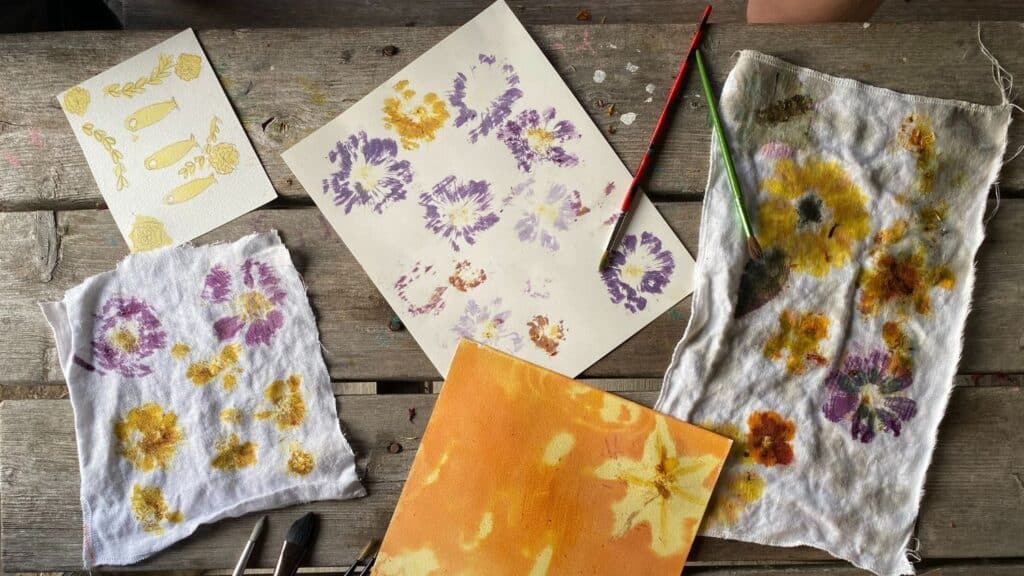
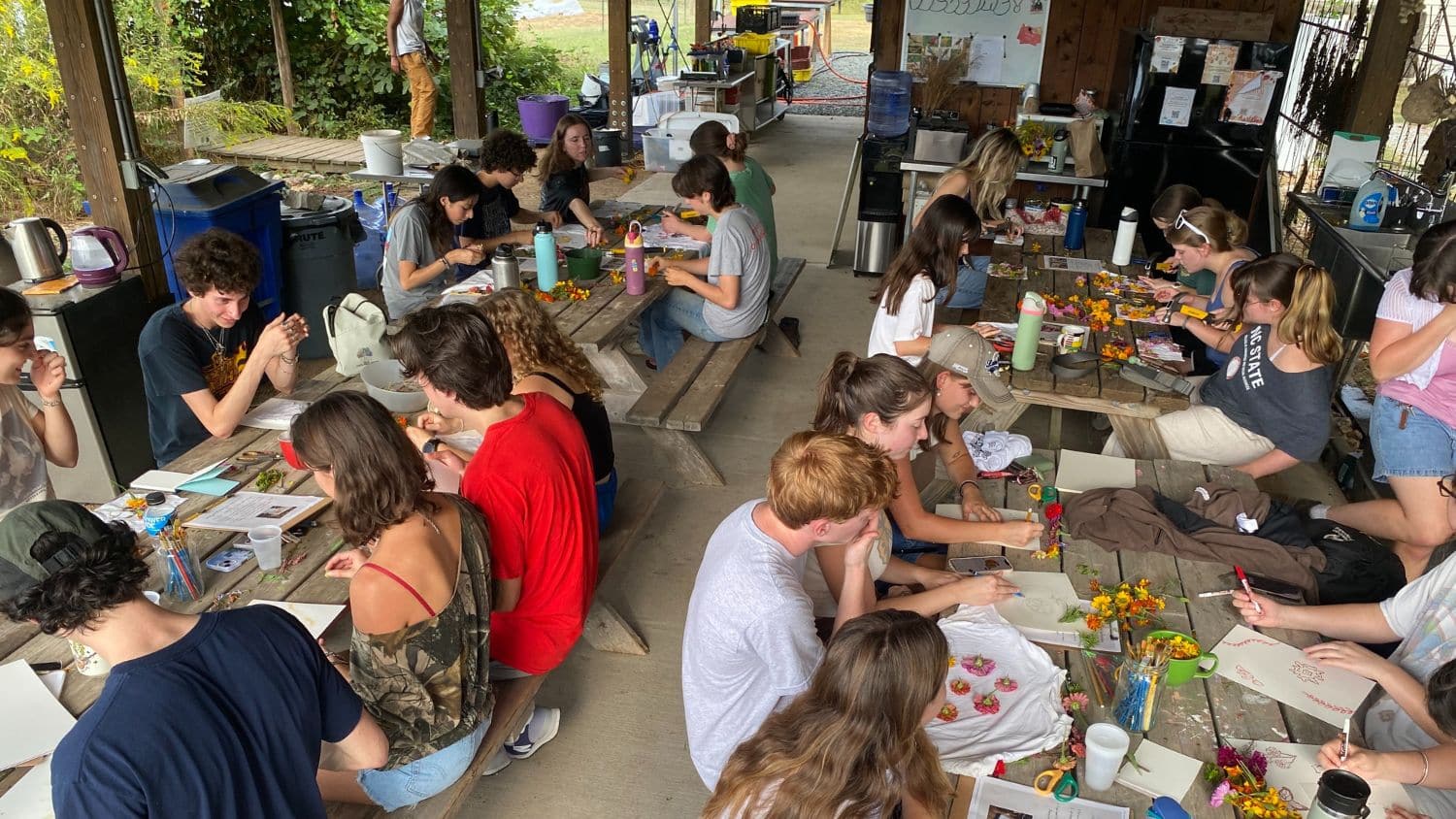
After planting seeds in the spring, the Eco-Design Outreach Club hosted their first event utilizing the now mature plants. Students worked with the flowers hands-on, experimenting with pressing them, extracting dyes and watercoloring.
The workshop gave students the opportunity to learn about agroecology and sustainable farming practices, while also collaborating with researchers at the laboratory’s farm to make its collection more diverse and relevant to a new group of students.
A prospective project involves upcycling 3D printed waste from around campus. According to Anderson, the club is only just getting started and is looking to expand to further projects.
She hopes the club will empower students to take initiative and find their own solutions when it comes to sustainability issues, rather than relying on others to make the change.
“I hope that this club will help people to say, ‘Hey, I can be a part of the solution. I can do something small and make an improvement in my community,’” Anderson says.
To learn more about upcoming Eco-Design Outreach Club initiatives and events, visit their Instagram.
- Categories: