70 Years After the First Artificial Aorta, NC State’s Medical Textile Innovation Is Only Getting Started
The historic breakthrough in 1955 sparked decades of biomedical innovation at the Wilson College of Textiles. Today, the college is a global leader in solving the most pressing healthcare challenges.
Think back 70 years, to the early 1950s. If you were diagnosed with a failing heart valve or some other major heart condition, the prognosis was far more grim than it is today.
When major arteries failed, doctors didn’t have reliable ways to replace them.
But in 1955, a historic scientific breakthrough at NC State changed the fortunes for cardiac patients almost overnight.
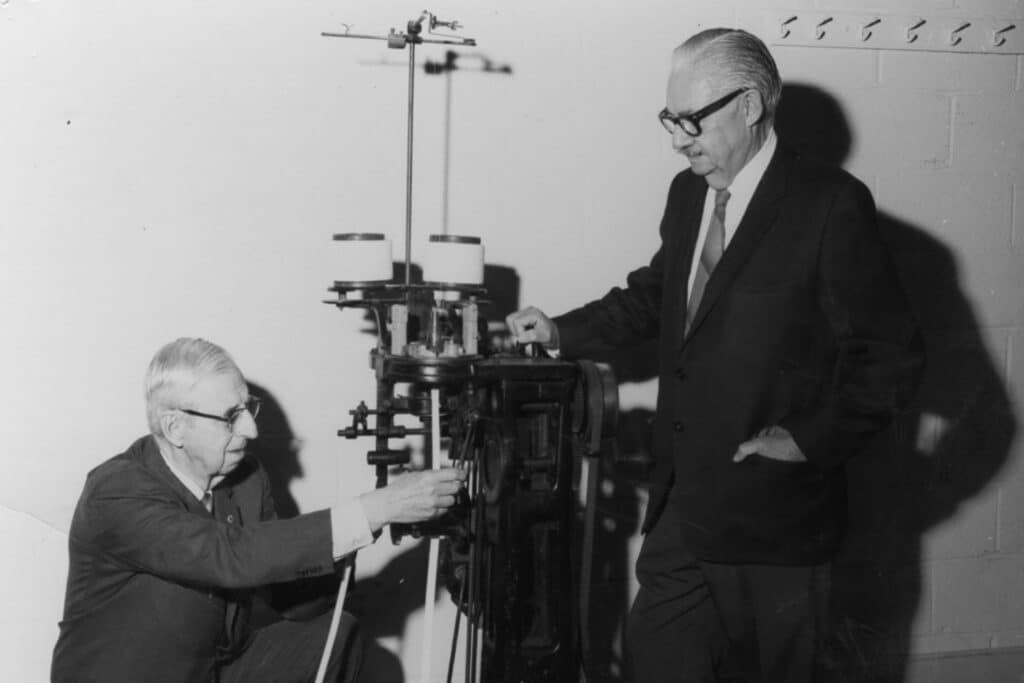
Using a necktie machine, a researcher at the Wilson College of Textiles created the world’s first successful synthetic aorta.
That innovation would eventually save the lives of millions around the world.
It would also launch a seven-decade foray into the field of medical textiles for the Wilson College, today one of the world’s leading institutions for developing cutting-edge tools to diagnose, treat and prevent medical conditions.
The college’s medical textiles origin story
To trace the origins of NC State and medical textiles, you have to go back to the mid-1950s.
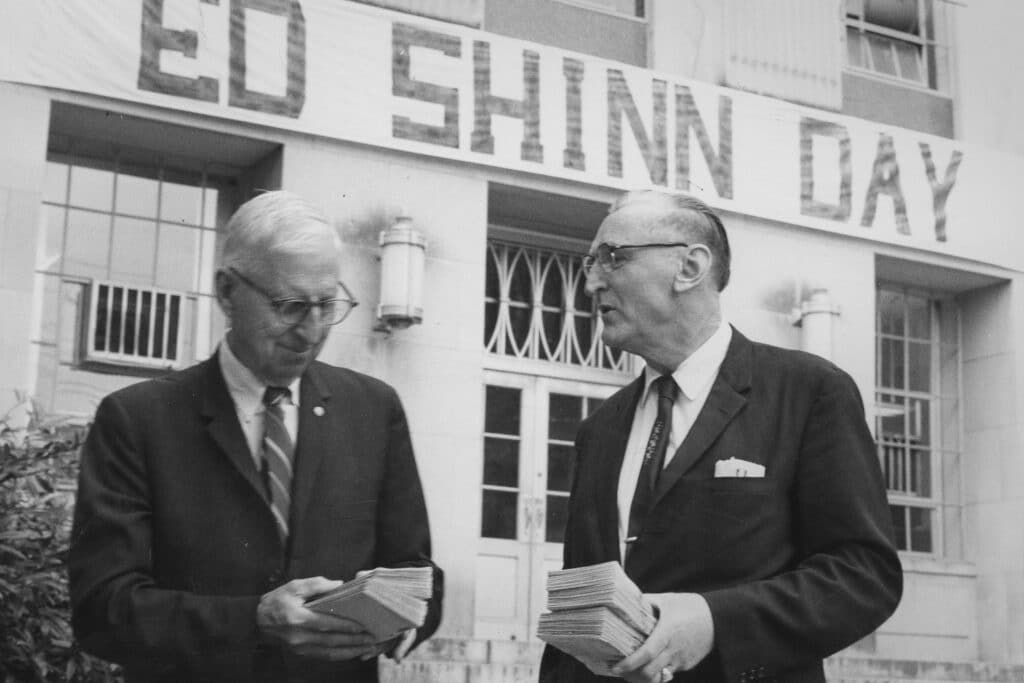
At the time, Professor William Shinn headed up the college’s knitting department, which was far from a well-known hub for medical innovation.
But in 1955, that reputation changed in a big way.
Two cardiologists from Charlotte Memorial Hospital asked Shinn to help them build an artificial artery, frustrated by the arterial grafts they’d constructed — which weren’t flexible enough to move and conform with the human body and everyday movement.
Shinn had a vision — one that would marry his knitting and polymer science expertise with the handiwork of a 27-year-old research assistant at DuPont Company in Kinston, North Carolina, some 80 miles from campus.
“My supervisor came to me and said, ‘Bill, I want you to make four or six tubes of polyester filament fiber,’” recalls William Rowland, now 97. “I didn’t know what it was for. It was just an assignment they gave me.”
It turned out to be historic work.
Days later, Rowland had the chance to watch Shinn put the finishing touches on the world’s first synthetic aorta at NC State.
That “heartwarming moment” of holding the aorta, as Rowland remembers it, would instantly transform prognoses for patients facing serious heart conditions. Among them: former Wilson College Dean Malcolm E. Campbell, who lived for seven years after receiving an artificial aorta in 1970.
That breakthrough would also set the stage for 70 years’ worth of medical textile innovation at the college.
Researchers drive decades of innovation
If you step on Centennial Campus today, you’re sure to encounter researchers working to solve the world’s most pressing healthcare challenges.
It’s a central focus at the college, which really took off after the turn of the century, when then-Dean A. Blanton Godfrey revamped the college’s curriculum to align with the skills he knew would be in high demand — a response to offshoring in other facets of the textiles industry.
In recent years, some of the college’s most groundbreaking discoveries have arisen from the Biomedical Textile Research Group, which is responsible for a wide range of technological breakthroughs that are helping patients — or will in the future.
The group is at the forefront of developing critical, cutting-edge healthcare tools like wearable sensors, implantable devices and dissolvable drug-delivery equipment.
“We’ve been able to show that, in fact, yes, medical textiles is a very important and new technology. That, like impermeable protective operating room gowns, it has a lot of merit,” says Professor Martin King, who heads up the research group, leaning on his decades of work collaborating with surgeons around the world. “And obviously, it involves manufacturing and developing and designing here in the United States.”
At all times, the core mission of King’s team is understanding what a doctor or a patient might need — and how textile structures might offer solutions.
A prime example: Ummay “Nisha” Jahan, one of King’s Ph.D. students, is currently testing an implantable textile mesh that will provide targeted drug delivery and help prevent the recurrence of abdominal cancer.
“I’m hopeful that it will be very impactful in patients’ lives,” Jahan says of her work, which is a partnership with Howard University. “We want this to be available to patients as soon as possible.”
What sets the college’s work at the crossroads of biology and textiles apart from all other institutions is the dual expertise faculty members and students bring to their work — a unique understanding of how both synthetic materials and the human body function.
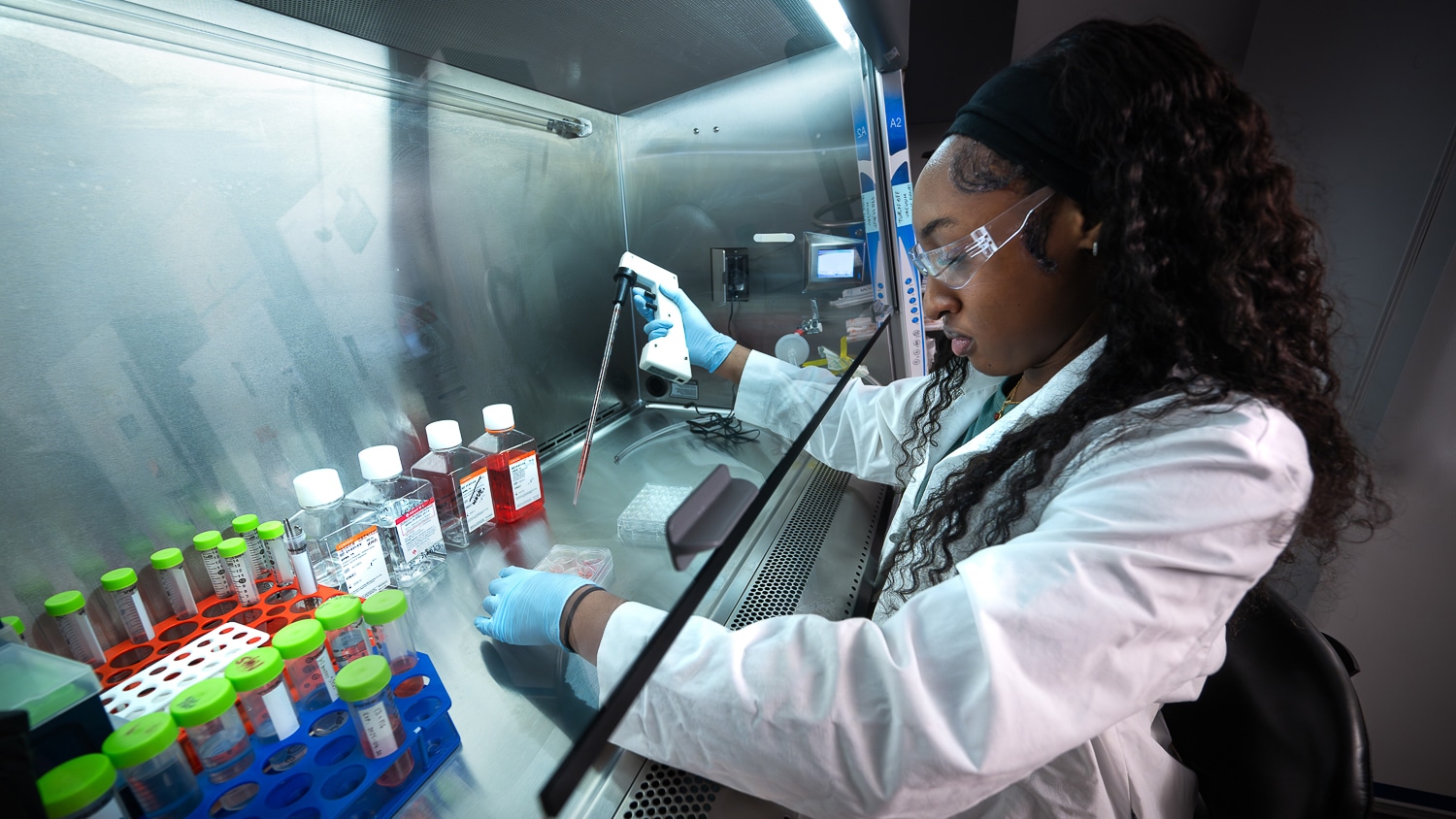
That two-track knowledge has helped Assistant Professor Jessica Gluck and her students find new solutions for mitigating heart disease.
Researchers with the Gluck Tissue Engineering Lab have also developed technology that may soon help veterinarians treat corneal injuries in animals.
“Textiles is not just towels and socks,” Gluck says. “We’re using these textile materials as a way to replicate what we’re seeing in the body.”
From 1955 to 2025 … and beyond
70 years later, biomedical innovation at NC State is only just getting started.
Emerging technologies and research breakthroughs promise to make the coming decades as significant as any the college has seen in solving major healthcare challenges.
That growth, King believes, should offer students promising job prospects for years to come.
“There are many employment opportunities in the medical device, biotechnology and pharmaceutical industries, in government departments, healthcare centers and medical research institutions where graduates can tackle exciting challenges,” King says, reflecting his experience of students who have graduated from Dean Godfrey’s revamped medical textiles curriculum.
Medical Sciences Concentration
See how it provides a unique pre-med program alternative for polymer and color chemistry students.
Medical Textiles Concentration
Textile technology alumnus Ross Mason chose the medical textiles concentration. Learn how he innovates medical textiles for use with prosthetics.
The growth of medical textiles at NC State also holds plenty of promise for the state of North Carolina.
Gluck is now working with the NSF Textile Innovation Engine in North Carolina to foster collaborative medical textile research across the state’s top academic institutions.
It’s part of a larger mission to expand North Carolina’s capacity for innovation in the textile industry — a multi-state collaboration reminiscent of one that, many years ago, produced the world’s first artificial aorta.
“I think what we’re seeing, and especially with the pandemic, is how much the field of medical textiles has evolved,” Gluck says. “Seeing that public health is something that people are talking about all the time now, how can we really incorporate that into people’s everyday lives. There are lots of opportunities.”
- Categories: