TPACC Collaborates With Firefighters As New Foams Enter Market
Safety is a top priority for firefighters, so having foams that extinguish flames – and prevent them from reigniting – is imperative.
While current firefighting foams used to extinguish Class B fires, or fires caused by flammable liquids or gases, do both of these things, they also come at a cost. Historically, most of these foams contained PFAS, a group of chemicals that break down slowly in the environment and are linked to harmful effects on humans and animals.
However, thanks to researchers, biodegradable foams have entered the market.
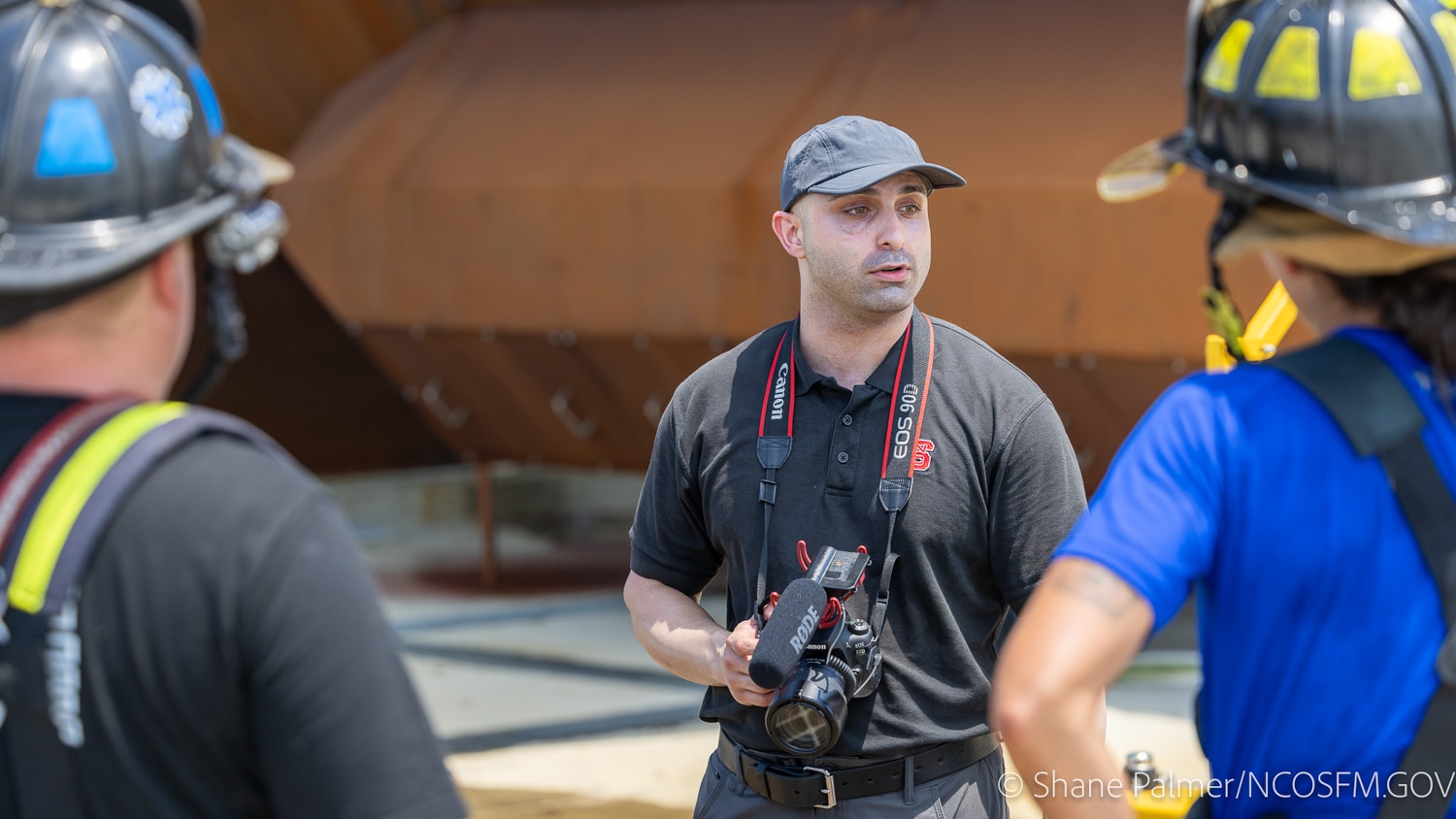
To help firefighters understand how to use these new foams, Arash Kasebi, NC State alumnus and postdoctoral research fellow at the Milliken Textile Protection and Comfort Center (TPACC), has teamed up with the NC Office of the State Fire Marshal and the NC Collaboratory to hold a series of hands-on trainings.
A history of firefighting foams
For over five decades, firefighters across the country have fought Class B fires with Aqueous Film-Forming Foam (AFFF), or “legacy foam.” When sprayed, these fluorinated foams create a thick foam blanket and film which spreads quickly over the fuel source, smothering the flames and cutting off the oxygen supply. By removing the heat source, fuel and oxygen, the fire is unable to reignite.
While AFFF are powerful extinguishing agents, they contain chemicals that pose health risks to humans and animals – and especially to the firefighters using them on a daily basis.
That’s why new foams entering fire stations across the state are non-fluorinated, and therefore do not contain the “forever chemicals” known as PFAS. Instead, they consist of various stabilizers, surfactants and compounds which are more biodegradable than AFFF.
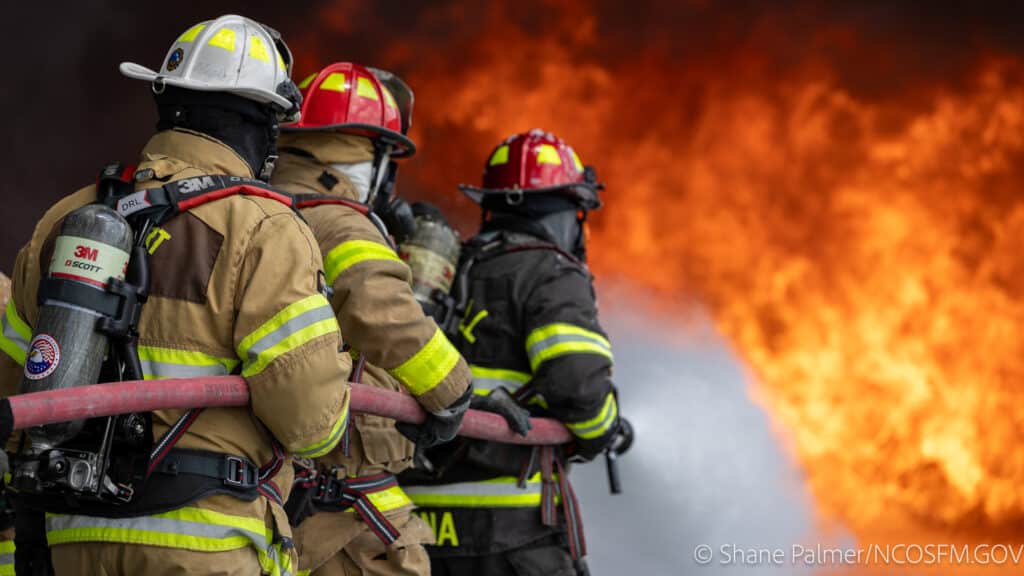
However, the non-fluorinated foams don’t create the same blanket of film that AFFF does. As a result, firefighters must deploy more foam on average and use updated techniques to extinguish Class B fires.
That’s where Kasebi, a volunteer firefighter himself, enters the picture.
New foams, new lessons
To help firefighters get comfortable using non-fluorinated foams, Kasebi is leading hands-on instructional courses at the North Carolina Emergency Training Center. The trainings are funded by the North Carolina Legislature.
The course starts in the classroom, with Kasebi sharing updated Class B fire statistics and information on the new foams.
“We’ll actually include incidents that have happened recently, and show them, ‘Hey, with the newer foams or the older foams, this is where these tactics can or cannot apply,’” Kasebi says. “And we’re able to give them a very personalized and relatable lesson on how to implement these new foam concentrates.”
Then, the group heads outside to practice using the foams on a wing prop and fuel pit, which simulates a downed plane and flammable jet fuel scenario. Kasebi says it’s important that each firefighter gets “nozzle time” to practice using the new foams and develop both confidence and muscle memory to prepare for real firefighting incidents.
“The way that this training is designed is to show firefighters that their basic foam-spraying principles still apply,” he says. “However, there are aspects they need to address when it comes to making sure that the foam is used in a way that is efficient. For example, you typically need twice as much foam with newer variants than the legacy foams.”
Looking forward
While the goal is to transition stations’ stock from AFFF to non-fluorinated foams, Kasebi says there are some exceptions. Some airport fire stations may still keep AFFFs due to the volatility of jet fuel fires and large numbers of human lives at risk.
There will be several more trainings held through the end of 2025. Kasebi says the group’s goal is to eventually create virtual lessons that can be accessed at any time, though he emphasizes the importance of the in-person training’s hands-on approach.
“TPACC and Arash Kasebi’s outreach and expertise have been instrumental in this project, particularly in the live testing of non-PFAS foams on petroleum fires,” writes North Carolina State Fire Marshal Brian Taylor, in a statement. “Their involvement has greatly supported the evaluation of foam performance in extinguishment and blanketing scenarios.”
- Categories: